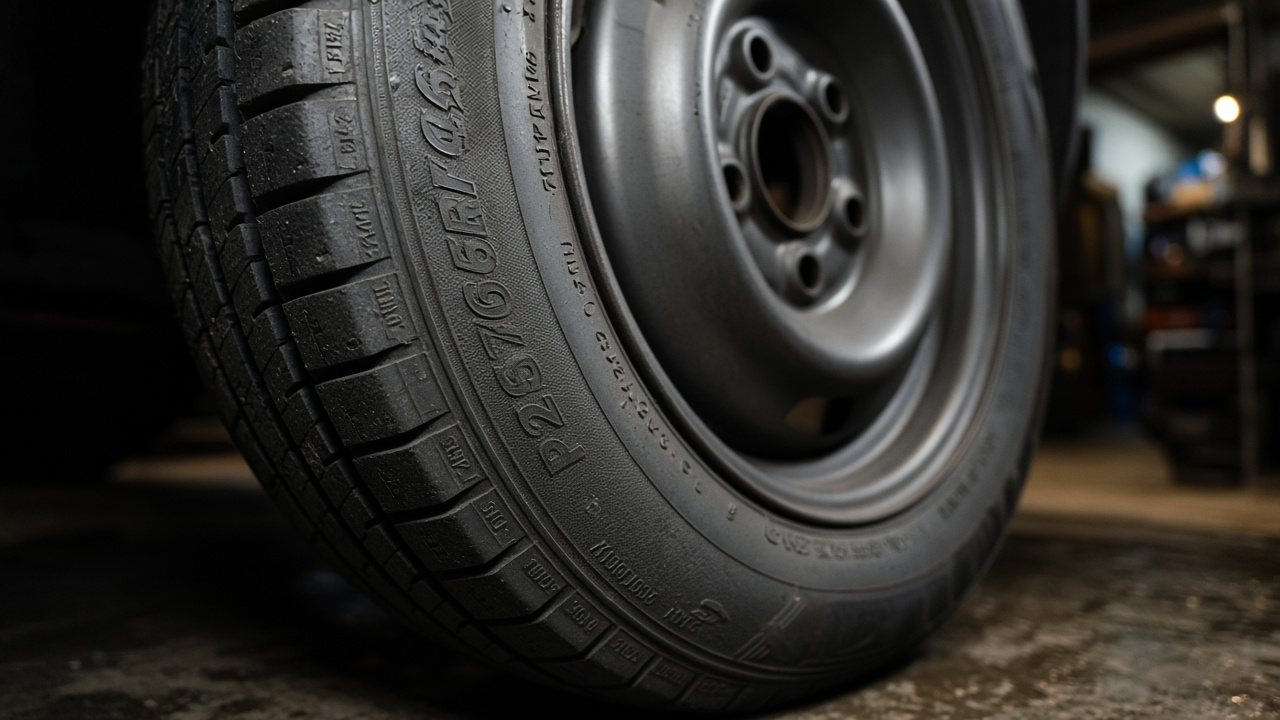
Exact
We have it
That exact size is on the lot.
If we don’t have the exact size on your sidewall, we look for another size on the same rim whose overall height is within 3%. That is a shop fitment rule. It is not a promise the gauges stay right or that every car should take it.
How we compare
The three sidewall numbers make one height. Width, aspect, and rim. Same math on every size.
Height is how tall the tire is on the wheel — rim in inches, plus the sidewall on top and bottom.
Height = rim × 25.4 + 2 × (width × aspect ÷ 100), in millimeters.
Two checks, in that order. Same rim first. Then height within 3%. If the rim number is different, it never enters the 3% compare. 225/50R17 can be close to 245/45R17. 225/45R18 can be close in height and still not count — that is an 18" tire, and an 18" tire will not go on a 17" rim.
Bridgestone, Les Schwab, and Continental use about ±3% overall diameter when the car maker does not give a tighter number. We use that same window, on the same rim only. It is a sizing guideline, not a safety certificate.
Plus-size — stepping the wheel up and dropping the sidewall — is a different job. That only works if they also change the wheels. We do not treat it as a similar size for stock, roadside, or this page.
What you’ll see
Exact
That exact size is on the lot.
Close
We don’t have yours. We have another size on the same rim, within 3% height.
None
No exact size and nothing in that 3% window.

Gauges
The car does not measure the road. It counts how many times the wheel turns, then multiplies by the height it was built for. A similar size is 0 to 3% off — almost nothing on a close match, up to the full 3% window. The gauges move by that same percent, not a flat 2 mph every time.
The dash reads low. You are going faster and farther than it says.
The dash reads high. You are going slower and less far than it says.
Factory gauges already sit a bit high. That stacks on top of the size change.
Tradeoffs
We can mount it. The car will drive. These are on you if you take the similar size.
A taller tire can put you over the limit while the speedo still looks legal.
The dash is no longer true miles. Overages follow the odometer, not the road.
Oil, brakes, and rotations land early or late by the same percent the height changed.
Same wheel-speed sensors. A height change can move when they kick in.
It still rolls. Mix heights and the center diff or transfer case works the whole time — chatter, heat, failure. Repair can run into the thousands. Our window is 3%. Subaru wants about ¼ inch of circumference; Kia wants 10 mm. If the car is AWD, four matched tires — not one similar size on one corner.

Hard no
These already passed same rim and 3% height. We still will not mount them.
Each tire has an allowed rim-width range. Too wide or too narrow and it will not seat right.
The new tire has to carry at least as much as what’s on the car now, and match the speed rating unless it’s a marked winter exception.
If it rubs the fender, strut, or liner at turn or bounce, it does not fit. A 3% height match does not mean it clears the well.
If the door sticker has a different size front and rear, match each end. Don’t put one “close” size on all four.
If the sidewall is hard to read, check another tire or call (312) 937-6047.